
Your cart is currently empty
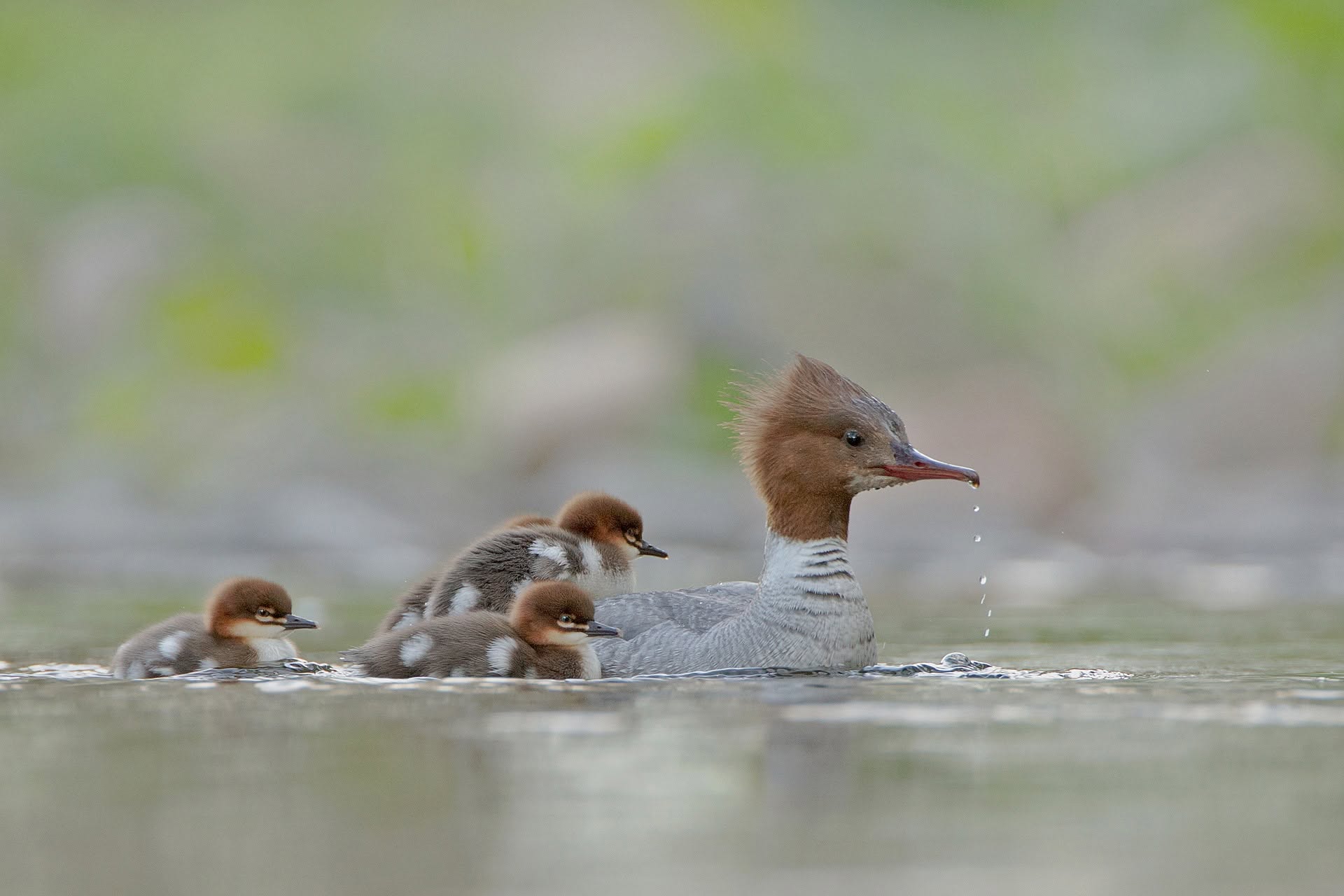
GAGA PROJECTS: SMALL HOUSE FOR A WINGED FAMILY
Schröderei together with the project GAGA help create safer nesting sites for common mergansers.
Because sometimes big changes in nature begin with a very small house.
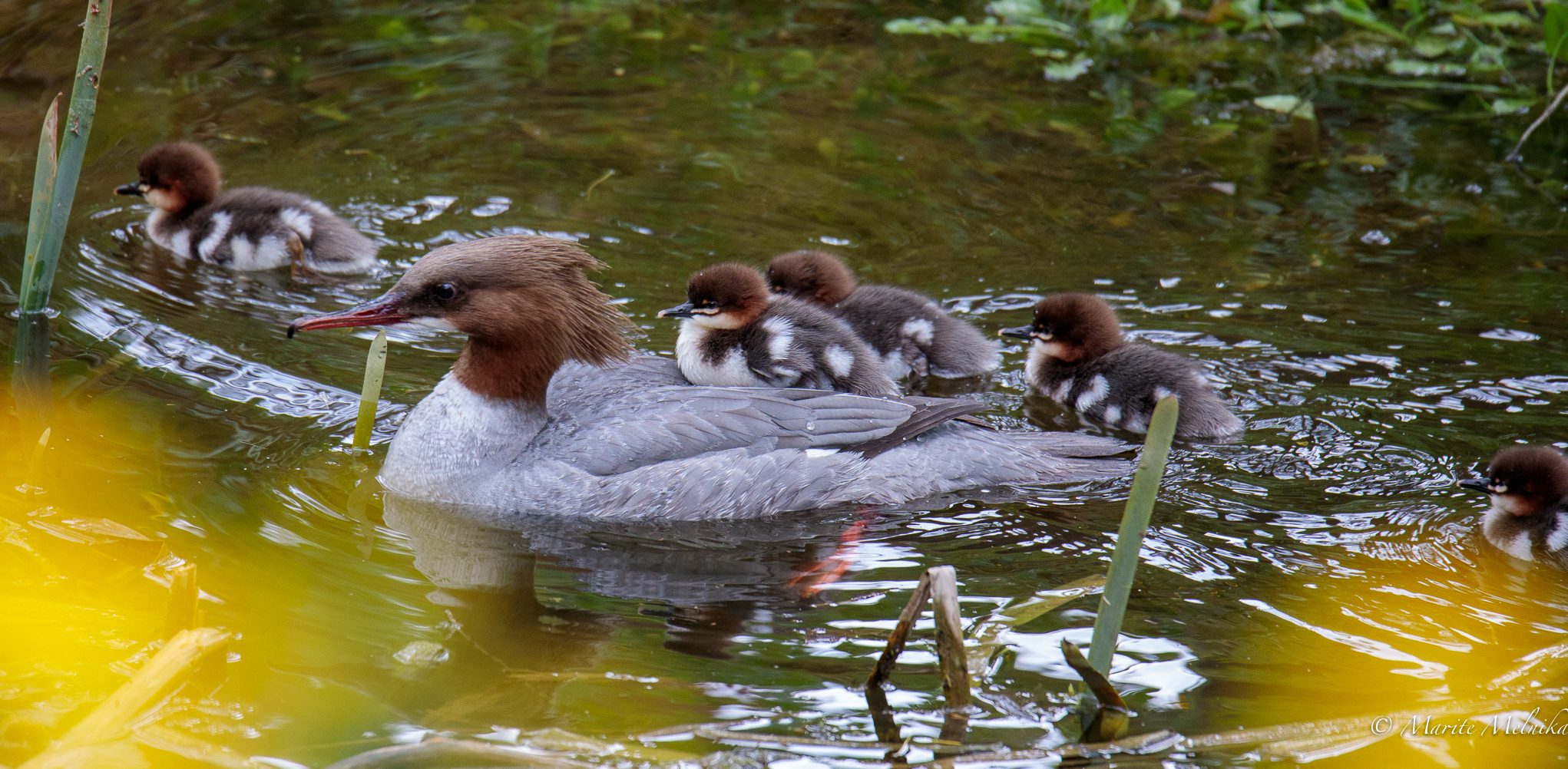
We are with the birds!
Being environmentally responsible means for us not only thinking about how we work today, but also about the environment we leave for tomorrow. Therefore, one of Schröder's priorities is responsible and environmentally friendly business, seeking opportunities to contribute beyond our daily work.
We are pleased to have started a collaboration with GAGA project, which has been helping common mergansers find suitable nesting sites in the urban environment for seven years.
This cooperation is an opportunity for us to support a practical and very concrete nature conservation initiative – creation of birdhouses specially designed for common mergansers.
These are small houses with great significance. A place for a bird to safely nest, hatch its eggs, and begin the journey of the next generation.
That is precisely why the slogan of our Gauru project is:
A small house for a winged family.
What is the goosander?
Big gaur (Mergus merganser) is a large waterbird of the duck family. However, its nesting habits differ significantly from what we typically imagine when we think of ducks and their ducklings.
The great gaura is cavity former. This means that they do not build their nests by the water’s edge or in the reeds. To nest, it needs a suitable cavity—for example, a hollow in an old tree, a hole carved by a black woodpecker, or a nest box specially built by humans.
The availability of suitable nesting sites is one of the reasons why humans can help the great spotted woodpecker.
By building and installing suitable nesting boxes, it is possible to create new places where female jays can nest and raise their young.
The first journey begins with a leap
The beginning of the common merganser's life is astonishing.
Once the chicks have hatched and it's time for them to leave the nest, they face their first major challenge. The cavity where the nest is located can be as large as up to 30 meters high.
The baby birds bravely jump from the nest to the ground and then, led by their mother, head to the nearest body of water. This journey can be long and dangerous—especially in an urban environment, where man-made infrastructure and other obstacles may lie between the nesting site and the water.
Yet this is how the journey of the new gaur family begins.
From a small hollow or a man-made cage to the first leap and beyond—into the water.
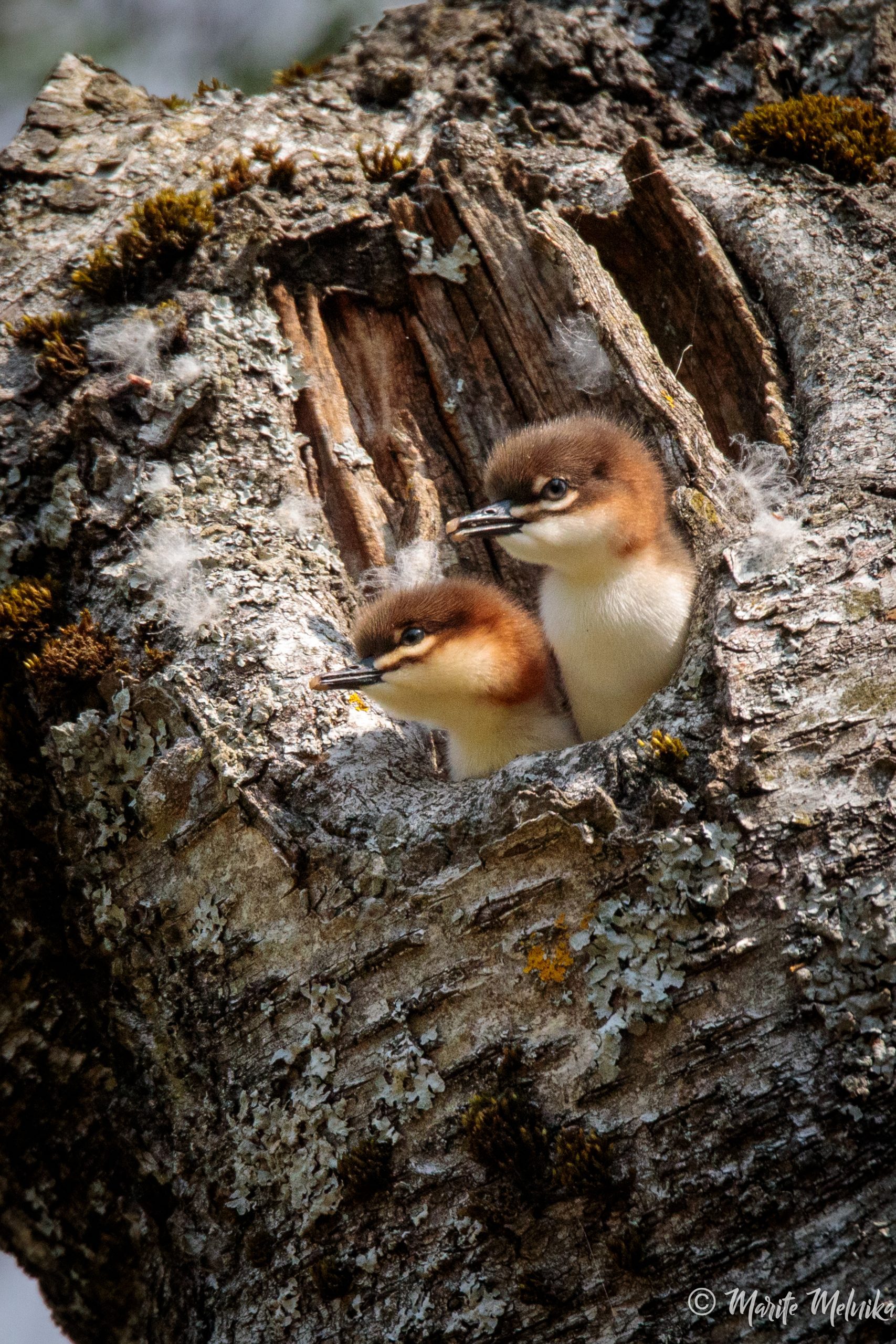
Why do deer need our help?
Under natural conditions, great spotted woodpeckers need suitable tree cavities for nesting. However, such sites are not always available where the birds need them.
Specially designed gaur cages can play an important role here.
They serve as an alternative to natural tree cavities and provide birds with another opportunity to find a suitable place to build a nest.
That's why the GAGA project isn't just about birdcages.
This is about a safe place for new life.
About the opportunity to help a species that, alongside humans, must also find its place in the urban environment.
And as a reminder that sometimes a practical and seemingly very small effort can become a significant contribution to the preservation of biodiversity.
The great gaur in Latvia
Approximately nests in Latvia all year round 100–150 pairs of large gaur. During the breeding season, they can be found near rivers and lakes, while in winter, great crested grebes stay in unfrozen areas of lakes and rivers, as well as along the seashore.
The great gaura is included on Latvia's list of specially protected species.
That is another reason why it is important to care for these birds and preserve suitable nesting opportunities for them.
Schröder × GAGA
In collaboration with the GAGA project, we want not only to talk about environmental responsibility, but also to turn this idea into real action.
By supporting the construction of nesting boxes for great spotted woodpeckers, we are helping to create new nesting sites for these bird families.
Each of these enclosures is a small part of a much larger story—one about the coexistence of humans and nature, about care, and about the desire to preserve Latvia’s natural diversity for future generations.
For us, this project is also an opportunity to learn more about the birds that live alongside us and to share this knowledge with others.
Environmental care doesn't always start with something big.
Sometimes they start with a single idea.
Together with the team.
One safe nesting place.
And, perhaps, a new feathered family.
A small house for a winged family.
Shredder is for the birds!